GigU - Drive Smart, Earn More
- 4.6
- Rating
- 1.00M
- Installs
- Free
- Price

 Analysis by App-foxy
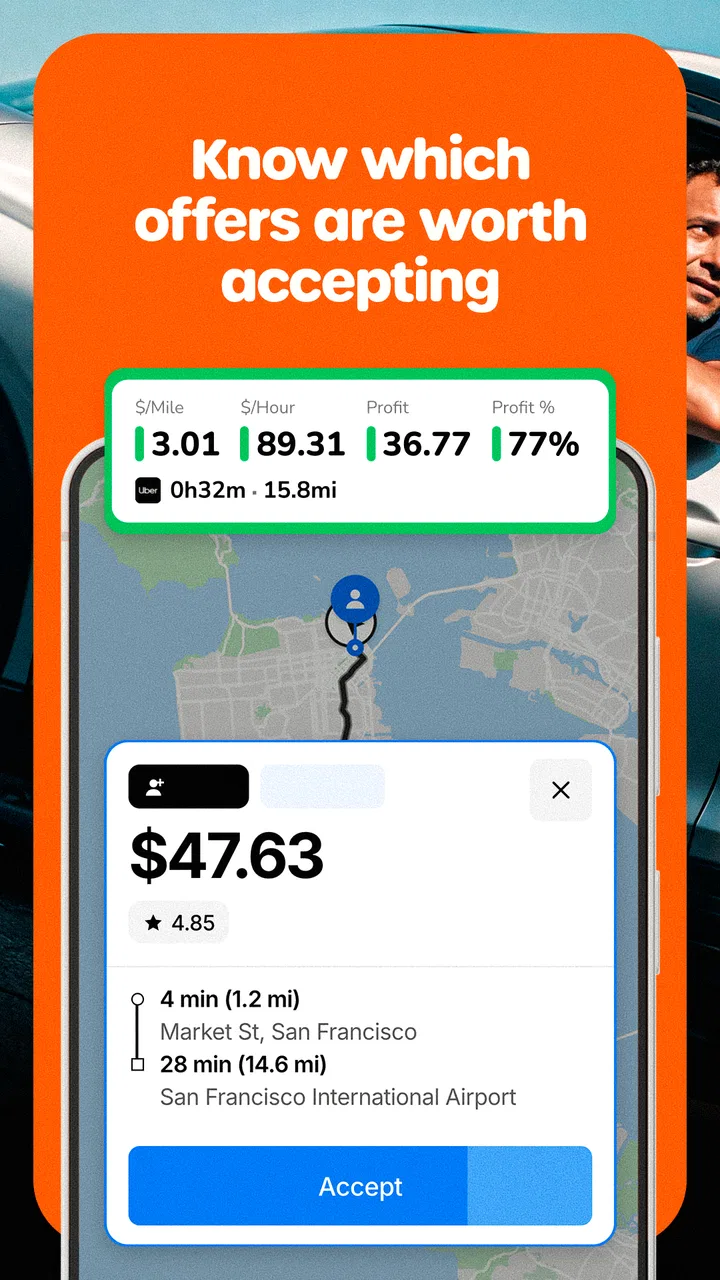
If you drive for delivery, rideshare, shopping, or another platform-based job, the difficult part is often not finding work. It is deciding which jobs are actually worth your time after fuel, distance, waiting, and the pressure of reaching a daily target. GigU - Drive Smart, Earn More is an Auto & Vehicles app from GigU that is built around that problem. I approached it as a working tool rather than something to browse casually, and its value becomes clearer when you use it before and during a real shift.
The app is free to install and available to Everyone, which makes it easy to try without committing money at the start. It has passed the early-adopter stage too, with over a million installs and a 4.3 average from around twenty thousand ratings. That does not guarantee it will fit every driving routine, but it does suggest that many people are using it for the same practical question: how can I make a gig-work day more deliberate instead of simply accepting whatever appears next?
Getting from installation to a useful first shift
Before your first shift, I’d decide what you want to learn rather than trying to track everything at once. A simple plan—one realistic target, a clear time window, and a note about the kind of work you’re aiming for—gives you something useful to compare with the day’s outcome. That makes the next step less about tapping through setup and more about building a routine you can actually keep.
You May Also Like

 Blood Strike: 2.5 Anniversary
Blood Strike’s Loadouts Turn Every Drop Into a Tactical Gamble
A close look at Blood Strike’s custom loadouts: how fast access to signature weapons reshapes its battle royale rhythm, rewards preparation, and narrows the gap between fights.

 Pandora - Music & Podcasts
Pandora’s Music Is Easy to Start, but Harder to Recover
Pandora’s strength is its low-effort path from a seed to a station. Its weak spot is how much confidence it asks you to place in connection, setup, and quiet recovery.

 8 Ball Pool
 Is Built on Rivalries, Rematches, and Routine
A close look at the rivalries, rematches, shared routines, and unanswered safety questions that turn a quick pool match into a persistent mobile community.

 Samsung Music
’s Quiet Strength Is Playing What You Already Own
Its reach comes less from spectacle than from dependable access to a personal library. That simplicity is both the app’s strongest retention engine and its ceiling.

 AccuWeather: Weather Radar
AccuWeather Review: A Quick, Clear Forecast for Everyday Decisions
For everyday plans, the best forecast is the one you can understand quickly. AccuWeather makes rain timing, radar, and local conditions easy to act on, with a few trade-offs.

 Hill Climb Racing
Why Hill Climb Racing Still Turns Crashes Into One More Run
A tiny car, a bumpy hill and one more upgrade: Hill Climb Racing keeps resurfacing because its simple chaos makes every near-miss feel personal.
More From Our News Desk



What to expect before you begin
My first recommendation is to treat GigU as a decision aid, not as a replacement for the delivery or rideshare platforms where you receive jobs. It is most useful when you already know the kind of work you do and want another layer for planning, comparing opportunities, and keeping your attention on a target. The store summary focuses on improving profits and reaching goals faster, but the real benefit is more grounded: the app can help turn a vague intention such as “I want a better day” into a repeatable way of judging your time on the road.
That distinction matters for first-time users. You should not expect GigU to create demand, guarantee profitable orders, or remove the costs that come with driving. A tool can make a poor offer easier to identify, but it cannot change traffic, parking, restaurant delays, fuel prices, or the policies of another gig platform. I found the best mindset was to use it as a second screen for thinking, while keeping the actual work app available for offers, navigation, and communication.
GigU is currently listed as version 1.1.75 and supports Android 8.0 or later. That makes it accessible on many older phones, which is useful for drivers who keep a dedicated device in the car. I would still prepare the phone before heading out: update the app when convenient, charge the device, and make sure the display is readable without forcing yourself to interact with it while moving. The app can support a driving workflow, but safe attention still comes first.
There are optional in-app purchases ranging from $6.95 to $49.95 per item. I would not pay immediately. Start with the free experience and decide whether it changes a real workday for you. A paid tool only makes sense if it saves enough time, prevents enough weak decisions, or helps you reach goals more consistently to justify the expense. A driver who works only occasionally may get all the value needed without upgrading, while someone working long shifts may eventually see more reason to consider the paid options.
Setting up a useful routine
For a first session, I would avoid trying to configure everything while parked between jobs. Open GigU when you have a few quiet minutes and decide what you want the app to help with. Is your priority a daily earnings goal, better use of limited hours, fewer empty miles, or simply a clearer view of whether a shift was worthwhile? Choosing one purpose prevents the app from becoming another source of numbers that you check without acting on.
A practical starting routine is to set a modest target for the shift, note the time you expect to work, and keep your definition of success consistent. If you change the target halfway through every day, it becomes difficult to learn anything from the results. I prefer judging a plan by the same basic questions: how much time did I spend available, how far did I travel, and did the work move me toward the goal without creating unnecessary dead time?
This is one of the less obvious ways to get more from the app. Do not use a goal only as a finish line. Use it as a filter for decisions during the day. If you are already close to your target, a long trip that takes you away from a busy area may not be worth the same trade-off as it was earlier. If you are well behind, you may need to change your hours or location rather than repeatedly accepting weak work. GigU is more helpful when the goal changes your choices, not just when it displays progress.
I also suggest keeping your personal expenses in mind instead of treating every gross earning as spendable income. Fuel, maintenance, insurance, and taxes affect the usefulness of a shift, even if the app helps you organize earnings. You do not need a complicated accounting system to begin. A simple note about fuel or charging cost, plus the time you were active, will make the app’s planning perspective much more realistic.
Your first meaningful action
The first successful action should be small: use GigU to plan one shift and make one decision you would otherwise have made by instinct. For example, before accepting a sequence of jobs, decide what kind of opportunity supports your target and what kind would consume too much time for too little progress. Then compare your end-of-shift result with that original plan. The point is not to produce a perfect forecast. The point is to create a feedback loop.
A realistic example is a weekday evening after work. You have a limited window before you need to return home, so the highest-paying-looking offer is not automatically the best one. A job that sends you far outside your usual area may require a long unpaid return trip. I would use GigU to keep the evening goal visible, consider the time commitment, and avoid letting one attractive number distract me from the whole route. If the shift ends with less driving and a closer match to the target, that is a meaningful first win even if the total is not dramatic.
Another useful workflow is reviewing the day immediately afterward while the details are still fresh. Ask which decisions helped and which ones only looked good at the moment. Perhaps a short trip kept you near more opportunities, or perhaps waiting in one area produced nothing and should become a signal to move sooner next time. This kind of review is where a planning app can become more valuable than a simple earnings display. The insight comes from connecting the goal with your behavior.
For drivers who use several gig platforms, the trade-off is more complicated. GigU may help you think across the whole workday, but you still need to avoid double-booking yourself or accepting jobs whose timing conflicts. I would use it to compare the shape of a shift rather than to chase every possible offer. A slightly lower opportunity that fits your route may be healthier than juggling incompatible tasks and creating delays for customers.
Where new users can get confused
The first common confusion is expecting a single number to tell you whether a job is good. In practice, profitability depends on distance, time, location, vehicle costs, and what the next opportunity might be. GigU can support the calculation and the goal-setting process, but you still need judgment. If you use the app mechanically, you may replace one form of guesswork with another.
The second confusion is mixing a work target with take-home pay. Reaching a gross earnings goal does not mean you have earned that amount after expenses. I would keep those ideas separate: use GigU for the work objective, then apply your own expense habits when deciding whether the day was financially worthwhile. This is especially important for drivers with older vehicles, long commutes, or frequent empty miles.
Another point that deserves attention is the difference between planning and navigation. I would never interact with GigU while driving, and I would not assume it replaces the navigation tools or communication features of a delivery or rideshare service. Set up your plan while parked, glance at information only when safely stopped, and let the active work platform handle the immediate job details. That approach keeps the app in its proper role and reduces distraction.
Some users may also wonder whether the free version is enough. My answer is to judge it by behavior, not by the number of available options. If the free tools help you establish a better routine and you can identify a specific limitation that affects your work, then a paid purchase may be worth investigating. If you have not yet used the app consistently enough to see a change in your decisions, paying more will probably not solve the underlying problem. The available purchases are a choice, not a requirement for discovering whether the approach suits you.
There is also a personal-fit issue. GigU is more appealing to someone who wants structure than to someone who dislikes tracking or works only when convenient. A driver who takes an occasional trip and does not care about targets may find a normal platform dashboard simpler. Likewise, if your main need is detailed tax preparation, vehicle maintenance records, or a full business ledger, you may be better served by a dedicated finance or mileage application alongside your gig platform. GigU’s strength is the connection between driving work and practical goals, not being every tool at once.
How it compares with familiar alternatives
The usual alternative is to rely on the earnings screen inside each gig platform and make decisions from there. That is fast and familiar, but it can keep your attention locked to one service at a time. GigU offers a broader planning perspective, particularly for people who switch between platforms or want to evaluate the whole shift rather than a single offer. The cost of that broader view is an extra step: you must enter the habit of checking and interpreting another app.
A spreadsheet or notes app can also do part of the job. Those options are flexible and may be better for people who want complete control over categories, expenses, and long-term records. They are less convenient when you need a focused workflow during a busy workday, and they do not naturally encourage a goal-based driving routine. I see GigU as the middle ground between a basic platform dashboard and a fully customized financial system.
Dedicated mileage or bookkeeping apps are stronger when your priority is documentation. They can be the better choice if you need detailed records for tax preparation or want to track vehicle costs over a long period. GigU makes more sense when the immediate question is, “What should I do with the hours I have today?” The two approaches can complement each other, but neither should be mistaken for the other.
The important trade-off is simplicity versus completeness. GigU’s focused purpose can make it easier to start, especially if complicated spreadsheets have never survived beyond a few days. At the same time, focused tools can leave you wanting more detail once your work becomes a serious business. I would begin with the simplest setup that changes your decisions, then add a separate record-keeping tool only if your needs grow.
Making the next step worthwhile
After the first successful shift, I would use GigU for several work sessions before drawing a firm conclusion. Look for patterns rather than one unusually good or bad day. Do your goals encourage better timing? Are you spending less time on work that pulls you away from useful areas? Are you finishing with a clearer understanding of why a shift succeeded or failed? Those answers matter more than whether the interface feels impressive on the first opening.
A helpful advanced habit is to create different expectations for different kinds of shifts. A short lunch period, a long weekend block, and a late-night session do not have the same opportunity pattern or expense profile. Treating them as identical can make your targets misleading. I would keep the planning method consistent while adjusting the goal to the time available and the kind of driving involved. That gives the app a fair chance to reflect your actual routine.
You can also use the app to test one change at a time. Try starting earlier, staying in a smaller area, or ending at a planned point instead of continuing until exhaustion. Review what happened, then keep or discard the change. This is more useful than constantly changing location, hours, and target together, because you will not know what actually helped. The app becomes a small experiment partner rather than a source of pressure.
GigU is a sensible recommendation for a gigworker who wants a clearer plan and is willing to make decisions from more than the headline payout. I like that it is free to begin, broadly accessible on Android, and focused on the practical tension between time, driving, and goals. Its limitations are just as important: it cannot guarantee good offers, replace navigation, or substitute for proper expense records. If you use it with those boundaries in mind, the path is reassuringly simple: install it, choose one realistic goal, plan one shift while parked, make one deliberate decision, and review the result. That is enough to discover whether this tool genuinely improves the way you work.
With a 4.3 average and a large installed audience, GigU - Drive Smart, Earn More has clearly found an audience among people trying to make gig driving more intentional. I would recommend it first to drivers who feel busy but are unsure whether their hours are being used well. I would skip it if you want a complete accounting system or refuse any form of planning. For everyone in between, the strongest reason to try GigU - Drive Smart, Earn More is not the promise of effortless profit; it is the chance to turn each shift into a more informed, repeatable decision.
FAQs for GigU - Drive Smart, Earn More
01What is GigU and how does it work?
GigU is a mobile application designed for drivers who want to maximize their earnings. The app connects you with multiple ride-sharing and delivery platforms, allowing you to manage all your gigs in one place. By using GigU, you can optimize your driving routes, track earnings in real-time, and receive alerts for high-demand areas to boost your income.
02Is GigU free to use, or are there any subscription fees?
GigU offers a free version with essential features, but to unlock premium tools like advanced route optimization and priority support, a subscription is required. Pricing is competitive, with monthly and annual plans available. Users can try the premium features with a free trial before committing to a subscription.
03Which platforms and services are compatible with GigU?
GigU is compatible with a wide range of popular ride-sharing and delivery services, including Uber, Lyft, DoorDash, and Grubhub, among others. The app continually updates its compatibility to include new platforms, ensuring that drivers have access to the latest opportunities to increase their earnings.
04How does GigU help improve my earnings as a driver?
GigU enhances earnings by providing drivers with tools to efficiently manage multiple gigs. Features like real-time demand alerts, optimal route planning, and detailed earning analytics help drivers make informed decisions. By reducing downtime and maximizing active driving hours, GigU users can significantly boost their income.
05Is my personal data secure with GigU?
GigU prioritizes user privacy and security. The app uses advanced encryption to protect your personal and financial information. It complies with data protection regulations, ensuring that your data is safe and not shared with third parties without your consent. Regular updates keep security measures up-to-date.
Pros
- User-friendly interface simplifies navigation.
- Real-time updates enhance driving efficiency.
- Flexible scheduling for driver convenience.
- Integrated earnings tracker for transparency.
- Comprehensive support for drivers' queries.
Cons
- Limited availability in rural areas.
- Occasional app crashes reported by users.
- High battery consumption during use.
- Requires constant internet connection.
- In-app ads can be distracting.

GigU - Drive Smart, Earn More
Gallery